
Innovation in Aeronautics: How WIIA Students Are Redefining the Future of Flight
1. Innovation: The New Altitude of Aviation
Innovation has always been the heartbeat of aviation. From the first powered flight to today’s supersonic jets and sustainable aircraft, every advancement has started with one bold idea.
At the Western India Institute of Aeronautics (WIIA), that spirit of innovation drives everything we do.
The Aeronautics Program is designed not only to teach engineering but to nurture the imagination that builds the future. Students learn how to think beyond conventional designs, use modern tools, and solve complex challenges that define the next generation of flight technology.
2. Turning Classrooms into Innovation Labs
At WIIA, every classroom is a laboratory for ideas.
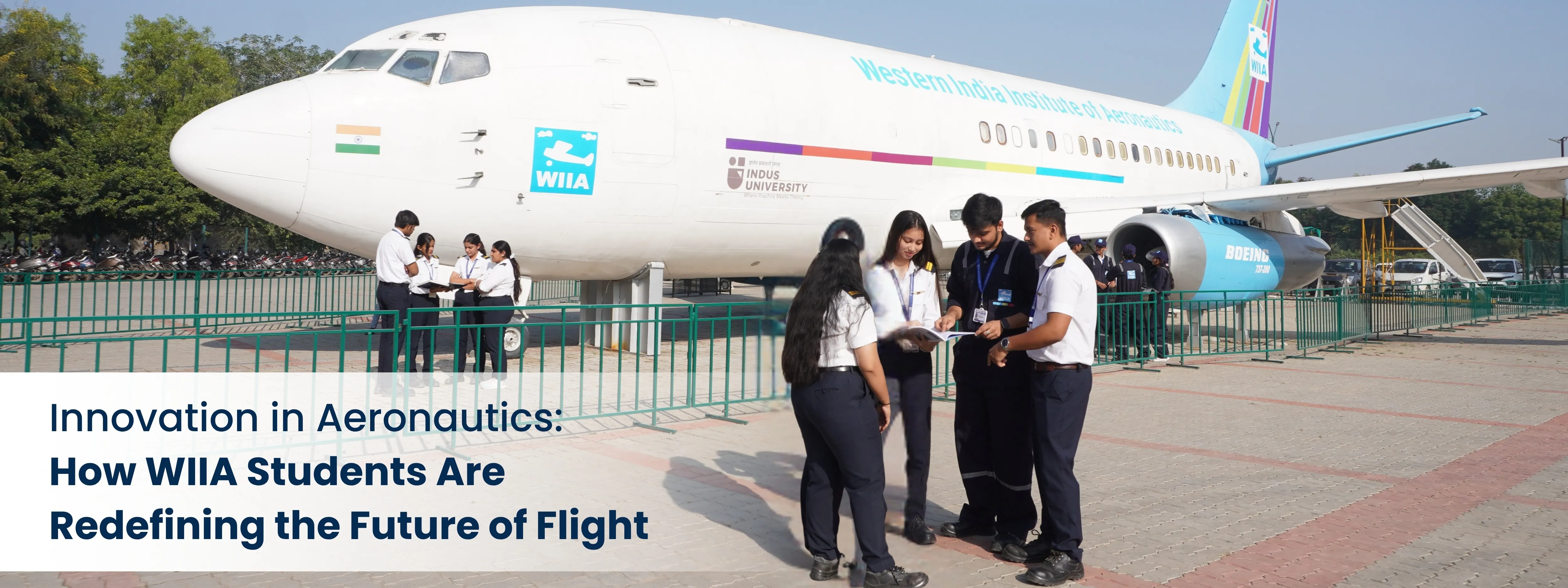
Students work on real-world projects, testing aerodynamic theories, improving aircraft performance, and experimenting with advanced materials and designs.
The institute provides access to wind tunnels, aircraft models, simulation tools, and engine systems giving learners the chance to test concepts hands-on.
Each project is an opportunity to explore innovation: reducing drag, increasing fuel efficiency, or enhancing safety through smarter engineering.
By learning through experimentation, students gain the confidence to innovate, not just study innovation.
3. The Power of Technology and Collaboration
The modern aviation world runs on technology, and WIIA ensures its students are fluent in it.
From computer-aided design (CAD) and aircraft simulation software to data analysis and AI-assisted systems, students are trained with the latest tools used by aerospace industries worldwide.
But innovation doesn’t happen in isolation. WIIA fosters collaboration between students, faculty, and industry experts. Group projects, design challenges, and research workshops encourage teamwork and creativity. Essential skills for success in the aviation ecosystem.
When students work together on a problem, they don’t just find one solution. They discover new ways of thinking.
4. Sustainable Flight: The Future of Aeronautics
The future of aviation lies in sustainability.
As the global industry moves toward greener technologies, WIIA is preparing students to lead this transformation.
Students explore eco-friendly aircraft materials, hybrid propulsion systems, and fuel-efficient designs through guided research and innovation programs.
This exposure helps them understand how to balance performance with environmental responsibility. A skill that is becoming increasingly valuable in global aviation.
Through these projects, WIIA’s Aeronautics students learn to see flight not just as a technology of speed, but as a science of sustainability.
5. From Students to Innovators
WIIA believes that every student has the potential to become an innovator.
The Aeronautics Program builds that mindset through mentorship, exposure, and experience. Faculty members guide students not just in technical understanding but in creative problem-solving, critical thinking, and leadership.
Many WIIA graduates have gone on to work in aircraft design, research, and aviation technology development, contributing to the future of aerospace innovation.
By combining technical excellence with a spirit of exploration, WIIA transforms its students into professionals who will redefine the way the world flies.
Conclusion
Innovation is not a chapter at WIIA it’s a culture.
Through advanced training, practical experience, and a deep commitment to progress, WIIA’s Aeronautics Program continues to produce engineers who think differently and act decisively.
The next great leap in aviation won’t come from machines alone. It will come from the minds that design them.
And at WIIA, those minds are already in flight.