

The Future of Drone Technology in Aviation: Innovation, Inspection & Intelligence
The aviation industry is entering a new era. One defined by automation, intelligence, and precision. Among the most transformative forces leading this change is drone technology. What began as a tool for aerial photography has evolved into a critical aviation asset that supports everything from aircraft inspection to airspace management.
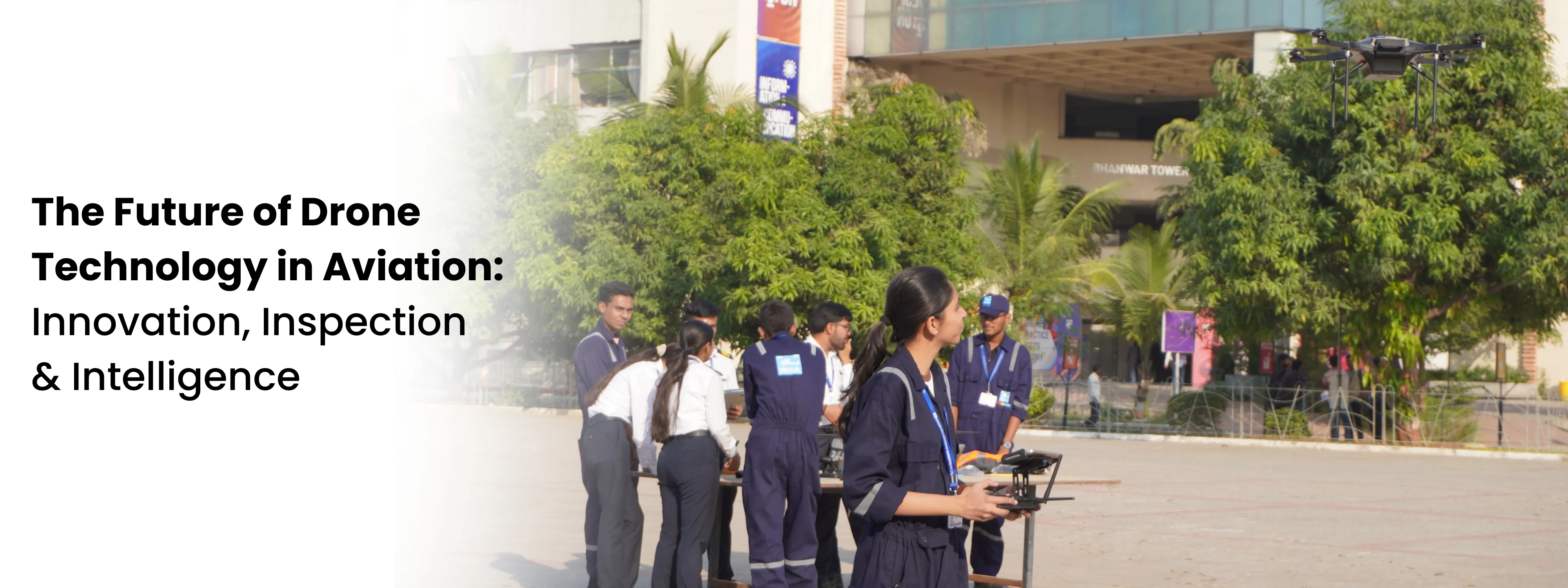
At institutions like the Western India Institute of Aeronautics (WIIA), drone training is no longer a futuristic concept, it’s a fundamental part of modern aviation education, preparing students to take flight in one of the fastest-growing technological sectors.
1. Drones: The New Frontier in Aviation Operations
Drones, or Unmanned Aerial Vehicles (UAVs), have rapidly become indispensable across the aviation ecosystem. Airlines, airports, and maintenance organizations are integrating drones for aircraft inspection, surveillance, and operational safety.
Unlike traditional inspection methods, drones can access hard-to-reach areas, reduce downtime, and minimize human risk. They conduct high-precision inspections of fuselages, wings, engines, and runways in a fraction of the time all while delivering accurate, data-rich insights.
The adoption of drone technology not only enhances efficiency but also transforms how aviation professionals approach maintenance and safety management.
2. Enhancing Safety Through Smart Inspections
In aviation, safety is non-negotiable. Drones are revolutionizing safety protocols by bringing automation, real-time monitoring, and predictive maintenance into the equation.
With advanced sensors and imaging systems, drones can detect micro-level defects such as cracks, corrosion, or loose rivets, issues that may be invisible to the naked eye. These early detections help maintenance teams act before potential failures occur, significantly reducing operational risks.
Training programs like WIIA’s Advanced Drone Certification Course prepare learners to conduct these high-accuracy inspections, process digital data, and generate reports aligned with aviation regulatory standards.
3. Data: The New Fuel for Aviation Intelligence
The future of drone technology lies not just in flying, but in data intelligence. Drones equipped with LiDAR, infrared, and hyperspectral sensors are capable of gathering vast amounts of data during inspection and surveillance operations.
This information, when analyzed through AI-driven software, provides predictive insights, allowing engineers and operators to anticipate technical issues before they arise.
From 3D modeling of aircraft structures to environmental monitoring around airfields, drones are shaping a data-driven approach to aviation management.
As aviation continues to embrace digital transformation, professionals trained in both drone operations and data analytics will play a crucial role in steering the industry forward.
4. The Expanding Scope of Drone Applications
While aircraft inspection remains a major focus, drone technology’s reach extends far beyond. In aviation, drones are now being used for:
- Runway and tarmac surveillance
- Aerial security and perimeter monitoring
- Emergency response and disaster management
- Cargo delivery and logistics optimization
Globally, aviation authorities are exploring drone-assisted air traffic systems and even urban air mobility solutions. From autonomous passenger drones to smart airport management, the possibilities are endless.
WIIA’s emphasis on hands-on drone training ensures that students gain real-world exposure to these emerging applications, making them future-ready professionals in a rapidly evolving landscape.
5. Building a Skilled Workforce for the Drone-Driven Future
As drone adoption accelerates, the demand for certified professionals with technical expertise and operational competence is soaring. The industry requires specialists who can design, operate, and interpret drone missions safely within aviation’s regulated environment.
WIIA’s advanced drone training courses are designed to meet this need, combining practical sessions, simulation exercises, and data analysis training. Graduates emerge not only as skilled pilots but also as innovators capable of applying drone intelligence to complex aviation challenges.
With global investment in drone technology expected to exceed $90 billion by 2030, the opportunities for skilled professionals are vast and rewarding.
Conclusion
The integration of drone technology marks a defining moment in aviation’s evolution. From aircraft inspection to airspace management, drones have redefined what’s possible — bringing greater efficiency, safety, and intelligence to every aspect of the industry.
Institutes like WIIA are playing a key role in shaping this transformation by nurturing professionals who understand both the science and the strategy behind drone operations.
As the skies become smarter and more connected, those equipped with advanced drone training and analytical expertise will lead the charge, engineering the next chapter in aviation innovation.